


Birth Justice Tribunals

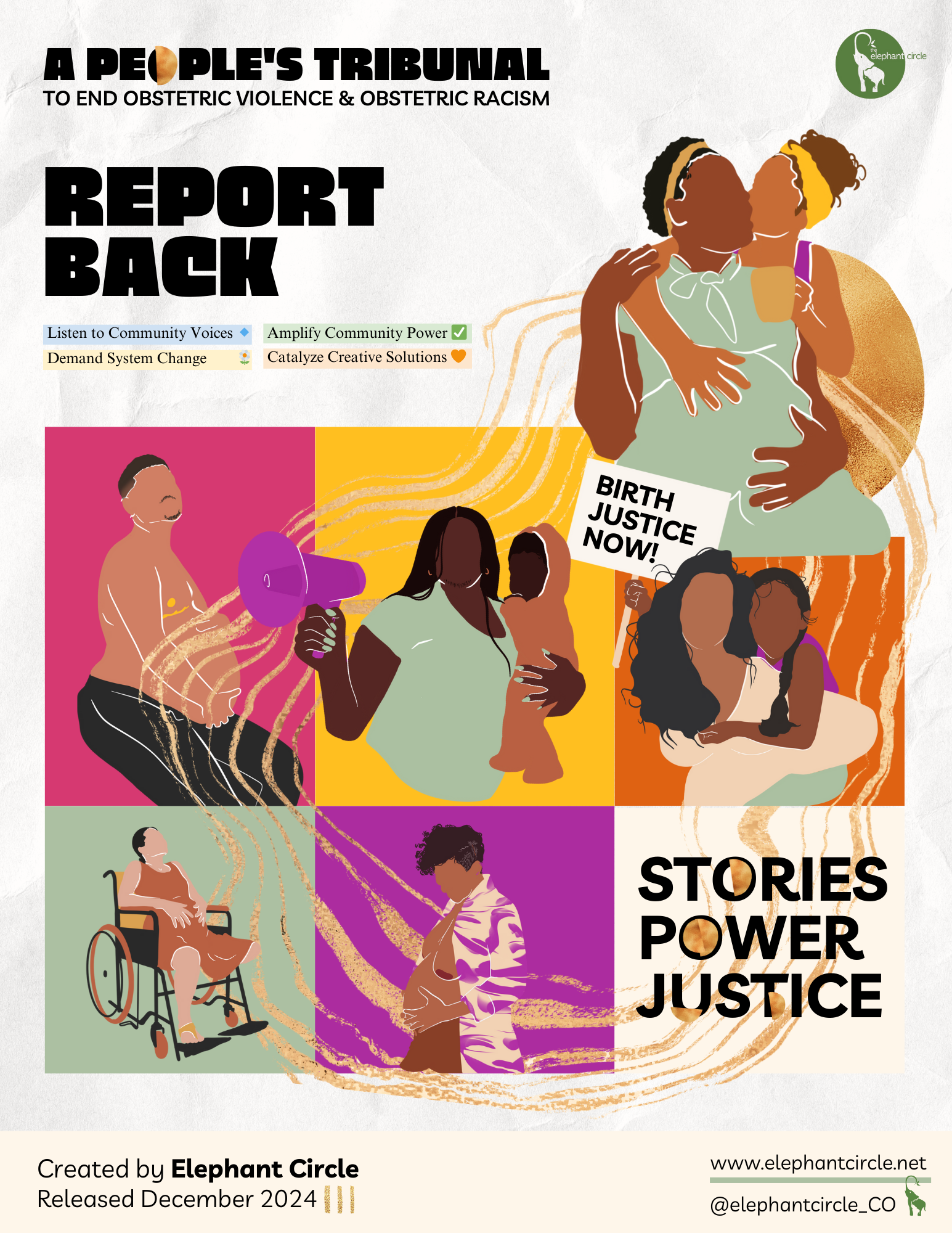
Lessons from our 2023 Tribunals in New York City, New York and Memphis, Tennessee
In Fall 2023, individuals and families came together from across the country — in New York (10/6) and Memphis (date changed to 12/1) — to share personal stories of mistreatment and discrimination during the perinatal period, and demand systemic change.
Obstetric violence and obstetric racism are distinct yet interconnected forms of discrimination, systemic harm, and violence. Both obstetric violence and obstetric racism are rooted in socio-cultural, political, and systemic sexism, racism, ableism, ageism, heterosexism, and transphobia.
Obstetric Violence
Obstetric violence and obstetric racism are distinct yet interconnected forms of discrimination, systemic harm, and violence. Both obstetric violence and obstetric racism are rooted in socio-cultural, political, and systemic sexism, racism, ableism, ageism, heterosexism, and transphobia.
The term “obstetric violence” was first coined by community advocates in Latin America. Obstetric violence refers to the phenomenon of abuse, coercion, and mistreatment that perinatal people experience as perpetrated by health providers. This mistreatment manifests in a range of ways including (but not limited to) subtle humiliation and manipulation of consent, name-calling and bullying, non-consensual medical procedures, forced surgeries, sexual violations, and physical restraint. A critical defining feature of obstetric violence is that these violations occur within the complex, and uneven, power relationships that exist between health providers and patients.
Obstetric Racism
“Obstetric racism,” first defined in the United States by Dr. Dána-Ain Davis, describes the mechanisms and practices of subordination to which Black people’s reproduction is subjected that align with histories of anti-Black racism. Obstetric racism transcends the limits of “obstetric violence” and “medical racism” and locates the specific ways that the reproducing Black body is subjected to medical encounters, experimentation, exploitation, and extraction. Obstetric racism and its manifestations are rooted in and informed by racial hierarchies that permeate our society. These racial hierarchies, dating back to slavery, structure Black value as it is construed in the engagements of Black women, transgender people, and gender diverse people within the biomedical and healthcare infrastructures. Obstetric racism is conceptualized in seven domains and experiences of obstetric racism frequently fall within one of these categories: diagnostic lapses; medical abuse; intentionally causing pain; coercion; neglect, dismissiveness or disrespect; ceremonies of degradation; and racial reconnaissance. Each of these dimensions of obstetric racism identifies the manifestation of racial discrimination in clinical and research protocols, practices, procedures, programs, and policies, and the racialized power dynamics that operate within health systems and facilities.
Obstetric violence and obstetric racism often rise to the level of human rights violations. Human rights are basic rights that every person is born with. Everyone is entitled to these rights without discrimination or prejudice, regardless of race, sex, nationality, ethnicity, disability, language, religion, class, or any other status. Governments bear primary responsibility to respect and protect human rights.
Governments are thus obliged to uphold and not violate human rights, to adopt laws and policies that protect human rights, and to create the conditions so that everyone can enjoy their rights. International bodies created to uphold these rights have recognized rights held by everyone that governments have a duty to uphold during the perinatal period. Instances of obstetric violence and obstetric racism endanger and violate these rights, including:
The right to life;
The right to the highest attainable standard of physical and mental health;
The right to liberty, autonomy, self-determination, and freedom from coercion;
The right to be free from violence;
The right to freedom from torture and cruel, inhuman, or degrading treatment, including freedom from medical or scientific experiment without free consent;
The right to informed consent and bodily integrity;
The right to equality and freedom from discrimination;
The right to protection from unlawful and arbitrary interference in the family; and,
The right to an effective remedy for the violation of their fundamental rights.

birth justice
Tribunal Report Back

Take Action with us — and our courageous tribunal speakers and human rights experts